Introducing Turtle Tips & Turtle Tracks
 Dale Snavely
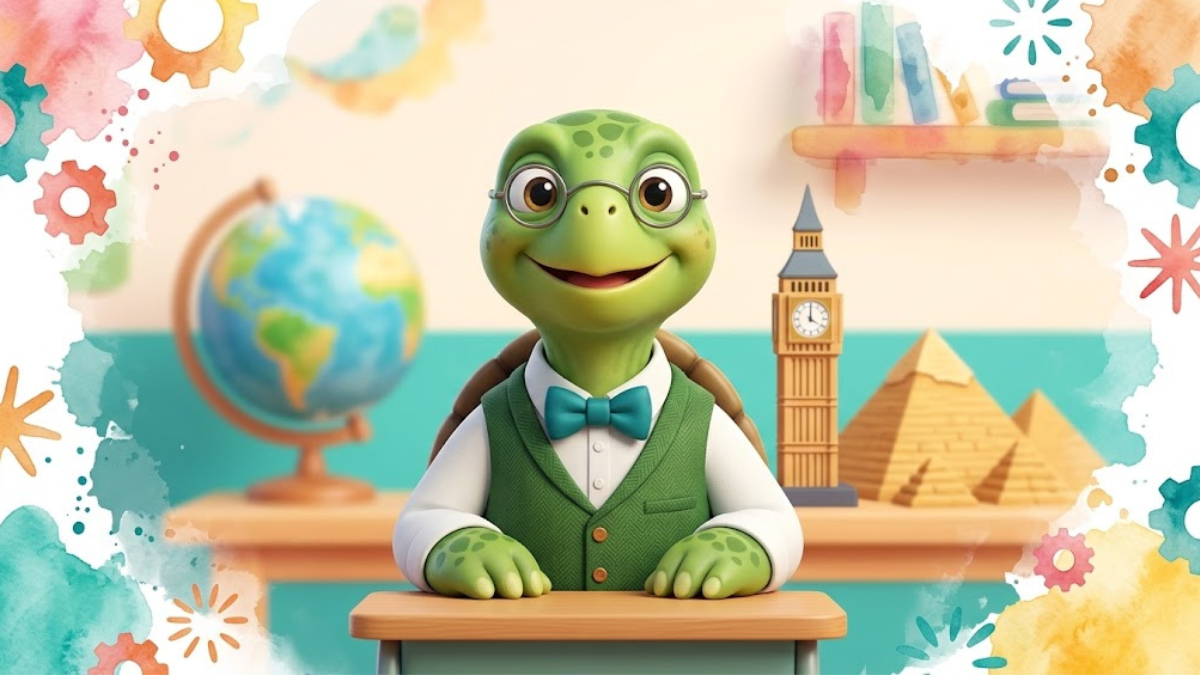
Explore bite-sized phonics and 10-second global field trips designed to build English confidence and active movement in language learners.
Introducing Turtle Tips & Turtle Tracks: Slow, Steady Steps Around the World
When you picture a turtle, you don’t think of rushing or frantic sprints. You think of slow, deliberate, steady movement forward. That calm, persistent rhythm is the heart of how language is truly learned—and it is the guiding philosophy behind everything we do at Teacher Turtle.
For early childhood classrooms, language educators, and self-paced learners worldwide, keeping learning approachable is essential. Long grammar lectures and dense worksheets often create friction and anxiety. Instead, real fluency grows when we break language down into joyful, bite-sized moments that fit easily into a daily routine.
To give classrooms, parents, and educators a predictable rhythm they can look forward to every single month, we are introducing two dedicated features: Turtle Tips and Turtle Tracks.
Two Monthly Features to Anchor Your Classroom Routine
Consistency builds confidence. By scheduling these highlights on alternating weeks, educators and families have ready-made micro-learning anchors to introduce during morning circle time or self-study sessions:
Feature | Monthly Schedule | Focus & Purpose | Format & Classroom Impact
|
|---|---|---|---|
Turtle Tips | One Tuesday per Month | Foundational Literacy & Core Phonics | Quick, practical linguistic nuggets (nouns, sounds, sentence building) focused on fluency before accuracy. |
Turtle Tracks | One Thursday per Month | Global Geography, Animals & TPR | 10-second micro-field trips linking iconic cities with native animals, phonics drills, and Total Physical Response (TPR) movements. |
The Power of TPR (Total Physical Response) in 10-Second Micro-Lessons
Language acquisition accelerates when you pair movement with speech. Total Physical Response (TPR) is an established teaching method in which physical motion reinforces memory and comprehension. In early childhood education and multilingual classrooms, children often understand and perform a concept physically long before they master native pronunciation.
By pairing dynamic physical prompts with clear phonemes, our 10-second Turtle Tracks allow students to:
Engage Kinesthetic Memory: Connecting muscle movement directly to new English vocabulary.
Eliminate Classroom Passivity: Turning screen time into active, energetic morning-circle participation.
Lower the Affective Filter: Removing the fear of making speech mistakes by letting kids move, mimic, and play together as a group.
Turtle Tips: Fluency Before Accuracy
Language learners frequently hesitate because they fear making mistakes. But true communication starts with building comfort. Our Turtle Tips focus on simple, memorable linguistic building blocks that strip away intimidation.
Core Concepts Made Plain: Defining grammar simply—like discovering how a noun is just a person, place, or thing—without academic jargon.
Phonemic Clarity: Crisp, clear letter sounds that young learners and ESL students can mirror immediately.
Low-Stress Practice: Encouraging children to speak and repeat naturally without the pressure of instant perfection.
Turtle Tracks: A 10-Second Passport to the World (With Active TPR)
Learning language is also about discovering the world around us. With Turtle Tracks, Teacher Turtle packs a backpack and visits world-famous destinations once a month, introducing native wildlife in their home environments with direct classroom action prompts.
City & Landmark | Featured Animal & Sound | Context Sentence | Classroom TPR Action
|
|---|---|---|---|
San Francisco (Fisherman's Wharf) | Sea Lion ("Arf! Arf!") | "The sea lion is barking." | Clap hands together and bark like a sea lion on the dock. |
London (Big Ben & Red Buses) | English Bulldog ("Woof! Woof!") | "The dog walks outside." | March in place with steady bulldog steps down the street. |
Chengdu (The Bamboo Forest) | Panda (Munching sound) | "Pandas eat green bamboo." | Use two hands to pretend to hold and crunch bamboo shoots. |
Giza (The Pyramids) | Camel (Gentle clip-clop) | "Camels walk in sand." | Step slowly in place with high, deliberate steps across the desert. |
How Teachers & Families Can Use This in 60 Seconds
Mark Your Monthly Calendar: Check in for our monthly Tuesday Turtle Tip and Thursday Turtle Track release.
Run the 3-Step Routine: Play the 10-second clip twice during morning circle or transitions:
Step 1 (Listen & Sound): Repeat the phonics letter sound with Teacher Turtle.
Step 2 (Speak): Say the short 4-word context sentence together aloud.
Step 3 (Move - TPR): Perform the physical animal action together to lock in the memory.
Follow the Journey: Scan the Teacher Turtle QR code or visit our channel directly at @teacher_turtle on YouTube to explore the growing library of free, zero-subscription learning tools.
Here is a direct link to our new YouTube Short, SeaLion:
https://www.youtube.com/shorts...
Slow and steady wins the race. We invite you to join Teacher Turtle on this journey—one step, one word, and one country at a time.
Categories: : Early Childhood Literacy, Early Literacy & Phonics, ELL & Bilingual Learning, English Language, English Vocabulary, ESL & Language Learning, Global Geography & Culture, Homeschool Resources, Phonics & Vocabulary, Total Physical Response (TPR)