The Expanding Impact and Universal Scaffolding of Teacher Turtle
 Dale Snavely
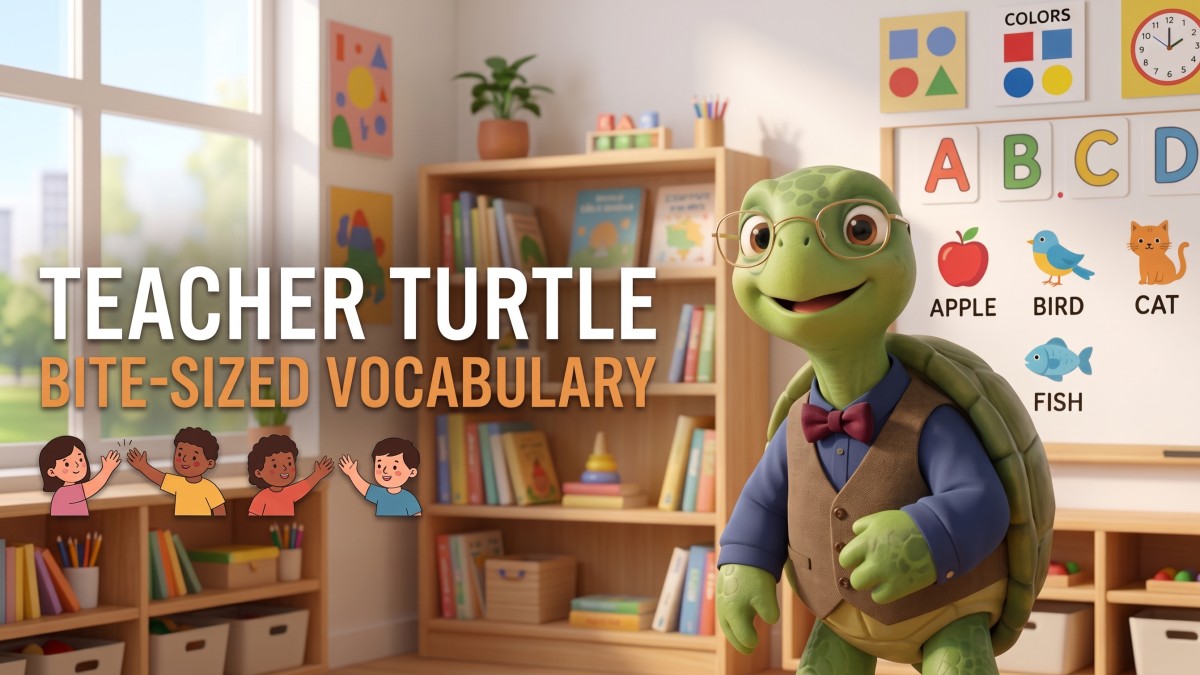
Originally for English Language Learners (ELL), Teacher Turtle embodies principles far beyond traditional language acquisition.
1. Executive Summary & Core Thesis
Originally for English Language Learners (ELL), Teacher Turtle embodies principles far beyond traditional language acquisition. By pairing deliberate, predictable pacing with expressive visual cues and bite-sized linguistic concepts, the platform serves as an accessible framework for cognitive rehabilitation, trauma-informed learning, adult literacy, and emotional decompression.
Rather than pivoting away from language education, this approach represents a deliberate expansion of use cases. The same foundational clarity that clarifies syntax for an English learner establishes a safe, low-friction, and dignified environment for diverse audiences navigating cognitive fatigue, high-stakes operational stress, or survival-mode trauma.
Click here for find the Teacher Turtle YouTube Link:
https://www.youtube.com/@teach...
2. Expanded Target Audiences & Pedagogical Applications
The micro-learning architecture of Teacher Turtle meets the precise needs of several underserved and distinct learner groups:
Audience Segment | Primary Need & Cognitive Friction Point | Teacher Turtle Solution & Impact
|
|---|---|---|
Early Childhood Learners | Short developmental attention spans; susceptibility to sensory overstimulation in modern media. | Calm, character-driven modeling; clear phonemic enunciation; uncluttered visual focus designed to foster foundational word recognition. |
Adult Literacy Learners | Social stigma, deep-seated embarrassment, and avoidance of intimidating, childlike remedial materials. | Dignified, non-judgmental visual scaffolding that deconstructs essential vocabulary into approachable, confidence-building steps. |
Cognitive Care & Senior Memory Support | Processing speed reductions, aphasia, post-stroke recovery, and mild cognitive impairment (MCI). | Predictable rhythm, high-contrast visual cues, and gentle repetition that stimulates neural retrieval pathways without inducing frustration. |
Trauma-Informed Learning & Recovery Support | Survival-mode hyper-arousal, executive function exhaustion, addiction recovery brain fog, and chronic instability. | Zero-barrier entry; low cognitive load requiring no testing or evaluation; calming visual stimuli that aid nervous system down-regulation. |
High-Stress Operational Environments | Hyper-vigilance, sensory overload, and acute fatigue in high-consequence roles (e.g., naval deployments, frontline service). | A grounded 60-second mental reset; an intentional pause blending lighthearted humor with focused mental grounding. |
3. Trauma-Informed Instructional Design: The Casework Lens
Insights derived from frontline community casework and addiction recovery environments reveal that cognitive processing cannot occur effectively when the nervous system remains in chronic fight-or-flight mode. Individuals experiencing acute trauma, substance dependency rehabilitation, or unhoused survival distress routinely face depleted executive reserves.
Teacher Turtle addresses these real-world barriers through specific trauma-informed design principles:
Regulation Precedes Cognition: By establishing a warm, high visual tempo, content creates sensory safety before introducing cognitive concepts.
Elimination of Performance Anxiety: Traditional educational systems evaluate and score, triggering feelings of inadequacy in vulnerable adults. Micro-learning removes evaluative pressure entirely.
Micro-Wins Rebuild Agency: Grasping a single concept or word in under sixty seconds delivers immediate closure, counteracting feelings of helplessness and cognitive paralysis.
4. Professional Positioning & Public Narrative Strategy
When communicating these broader applications on professional platforms such as LinkedIn, maintaining an objective, systems-oriented framing protects personal boundaries while establishing high credibility:
Utilize Industry-Standard Terminology: Frame discussions around Trauma-Informed Instructional Design, Cognitive Load Management, Executive Function Scaffolding, and Universal Design for Learning (UDL).
Emphasize Institutional Utility: Target communications to the professionals who support these communities—such as Speech-Language Pathologists (SLPs), memory-care coordinators, adult education instructors, and community caseworkers—and demonstrate how short-form video serves as an adaptable facilitation tool.
5. Channel Architecture: Curated Playlists & Strategic Cadence
Scaling reach across diverse user demographics requires intentional content organization and a sustainable release cadence:
Thematic Playlists as Functional Tracks: Organizing content into specific playlists (e.g., Foundational Vocabulary, Mindful Language Moments, Everyday Expressions) allows educators, clinicians, and learners to navigate directly to their relevant focus area without visual clutter.
The Power of Scarcity (48-Hour Publishing Cadence): Distributing one deliberate video every two days (3 to 4 per week) avoids audience fatigue, prevents algorithmic self-cannibalization on YouTube Shorts, and reinforces a predictable, healthy learning habit.
6. The Deeper Mission: Dignity, Connection, and Laughter
At its core, learning is an emotional and human endeavor. Whether someone is navigating the isolation of memory loss, the daily toll of recovery, or the intensity of a high-pressure deployment, small moments of levity and calm clarity restore balance. Teacher Turtle bridges this gap by providing an accessible, dignified space to pause, refocus, and smile.
7. Conclusion: Purpose Through Adversity — The Personal Catalyst for Wellness Learning
There are very few true accidents in life; more often, unexpected disruptions arrive carrying distinct purpose and clarity. The journey of Teacher Turtle is inextricably linked to navigating personal vulnerability—specifically, enduring a severe illness and the painful physical recovery following a serious fall.
When one experiences bodily limitation, chronic pain, or systemic exhaustion firsthand, theoretical models of education fall away. In their place emerges an acute awareness of what the human mind and body actually require to heal: simplicity, patience, and non-demanding engagement. Teacher Turtle has served as its creator's own cognitive anchor, offering structure and focus during periods of intense physical strain.
This lived experience illuminates an urgent, broader societal need for wellness-oriented instructional design. Effective cognitive rehabilitation does not require complex frameworks or high-stress curricula; it requires accessible, bite-sized concepts that respect the learner's energy reserves. Ultimately, Teacher Turtle is more than a vocabulary platform—it is living proof that life's hardest physical trials can sharpen our vision, transforming personal recovery into a universal tool for dignity, wellness, and healing.
Click the link to go to Teacher Turtle's YouTube Channel:
https://www.youtube.com/@teach...
Categories: : Early Literacy & Phonics, ELL & Bilingual Learning, Instructional Design & Technology, Neuro-Inclusive Education, Teacher Turtle Updates